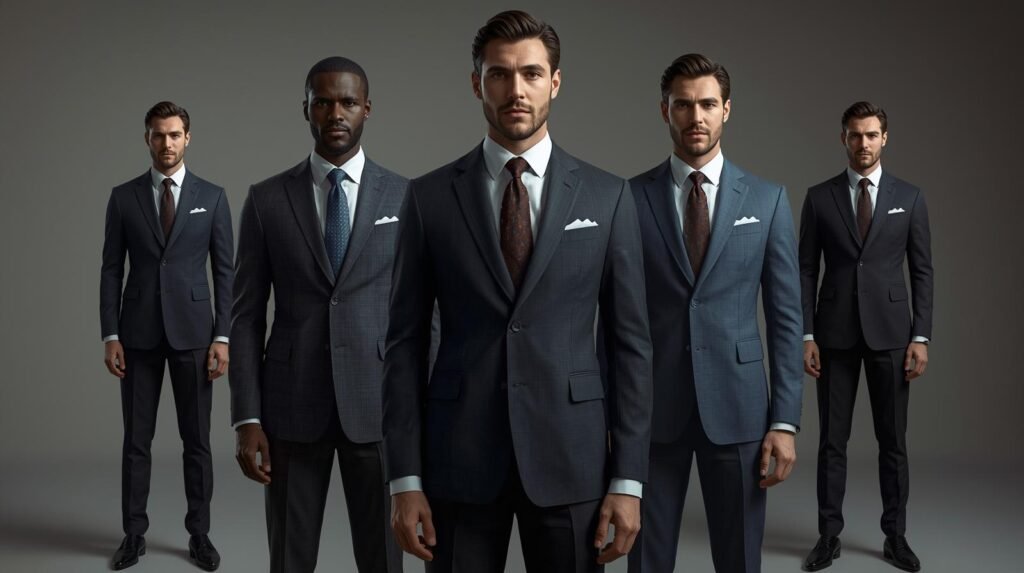

Selecting the right suit enhances appearance, improves confidence, and ensures comfort. Different body types require specific cuts, fits, and styles to create a balanced and polished look.
This guide provides practical advice on choosing suits for various male body types.
Why Fit Matters
A properly fitted suit:
- Enhances proportions and posture
- Creates a polished and professional appearance
- Provides comfort for extended wear
- Complements individual body shape
Understanding body type is key to selecting a flattering suit.
1. Suit for Slim or Lean Body Types
Features to consider:
- Slim-fit suits to complement the body shape
- Narrow lapels and tapered trousers
- Lightweight fabrics for structure without bulk
Tips:
- Avoid oversized jackets or wide trousers
- Choose single-breasted jackets for a streamlined look
- Use light layers for added dimension
2. Suit for Athletic or Broad Shoulders
Features to consider:
- Structured jackets with moderate padding
- Slightly tapered waist for proportion
- Straight or slim trousers to balance upper body
Tips:
- Avoid overly tight jackets that restrict movement
- Use neutral colors to avoid drawing unnecessary attention
- Layer minimal shirts or t-shirts under jackets for comfort
3. Suit for Larger or Heavier Builds
Features to consider:
- Darker colors for slimming effect
- Single-breasted jackets to avoid extra volume
- Structured fabric to maintain shape
Tips:
- Avoid overly tight or double-breasted suits that add bulk
- Opt for vertical patterns or subtle pinstripes for elongation
- Use lightweight layers for breathability
4. Suit for Shorter Body Types
Features to consider:
- Proper jacket length ending near the hip
- Slim trousers without excess fabric
- Vertical lines or patterns to create length
Tips:
- Avoid long jackets that overwhelm proportions
- Single-breasted jackets create a clean vertical line
- Use monochromatic or tonal outfits for visual elongation
5. Suit for Taller Body Types
Features to consider:
- Balanced jacket proportions to avoid disproportion
- Wider lapels or double vents for structure
- Tailored trousers for clean lines
Tips:
- Avoid overly slim or short jackets
- Pair with appropriate shoes to maintain proportion
- Layer minimal shirts to keep vertical balance
6. Suit Components
- Jacket: Single or double-breasted depending on preference and body type
- Trousers: Tailored length with proper taper
- Shirt: Collar and sleeve length must complement jacket fit
- Accessories: Tie, pocket square, belt, and shoes coordinated with suit
7. Color and Fabric Considerations
- Neutral colors for versatility (navy, gray, black)
- Seasonal fabrics: lightweight wool, cotton, or blends for comfort
- Patterns like pinstripes or checks to enhance proportions
Tips:
- Match suit tone with event or setting
- Avoid excessive patterns that disrupt body balance
8. Practical Tips for Buying a Suit
- Get measured by a professional tailor
- Try on different cuts and styles for best fit
- Consider tailoring for jacket sleeves and trouser length
- Focus on comfort, mobility, and proportion
Common Mistakes to Avoid
- Wearing off-the-rack suits without adjusting fit
- Ignoring body type when choosing jacket or trousers
- Selecting fabrics inappropriate for season or activity
- Over-accessorizing or mismatched components
Final Thoughts
Choosing the right suit requires understanding your body type, fit, and proportions. By selecting tailored jackets, trousers, shirts, and accessories appropriate to your shape, anyone can achieve a polished and confident look.
Proper tailoring, neutral colors, and proportion-conscious designs ensure comfort, style, and versatility across professional and formal occasions.