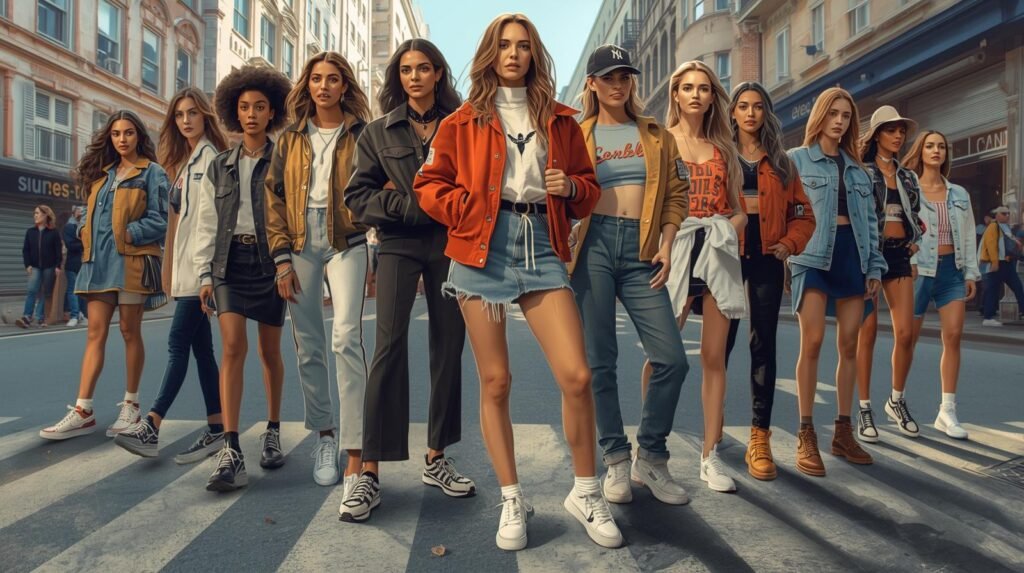

Street style reflects real-world fashion that combines comfort, functionality, and personal expression. Observing street style provides inspiration for everyday outfits that are practical, stylish, and adaptable to work, casual, or social settings.
This guide explains how to create outfits inspired by street style while maintaining balance and versatility.
Why Street Style Matters
Street style offers benefits:
- Demonstrates practical outfit combinations
- Shows how to mix casual, formal, and seasonal clothing
- Highlights versatile layering and accessorizing techniques
- Inspires individual style while staying comfortable
Using street style as inspiration allows you to create outfits that are both functional and stylish.
1. Casual Everyday Outfits
Street style prioritizes comfort and functionality:
- Simple tops with jeans, trousers, or casual skirts
- Lightweight outerwear such as jackets or cardigans
- Neutral or seasonal colors
- Minimal accessories for daily use
How to adapt:
- Choose clothing that fits comfortably
- Focus on proportion and layering for variety
- Add one accessory to complete the outfit
2. Layered Looks
Layering is key in street style:
- Combine t-shirts, shirts, and jackets
- Mix textures and lengths for visual interest
- Adapt to weather and activity
How to adapt:
- Layer one or two pieces to maintain balance
- Use neutral colors as base layers with a statement outer layer
- Avoid bulky layers that restrict movement
3. Footwear Selection
Street style emphasizes practical footwear:
- Sneakers for casual outings
- Loafers or ankle boots for semi-formal settings
- Functional shoes for walking or commuting
How to adapt:
- Match footwear with outfit type
- Rotate shoes seasonally for comfort and style
- Maintain clean and polished footwear for a refined look
4. Accessory Integration
Accessories add personal touch to street outfits:
- Scarves, belts, bags, and watches
- Minimal jewelry for casual looks
- Layered accessories for subtle style
How to adapt:
- Use one statement accessory per outfit
- Match accessory colors with clothing for cohesion
- Avoid excessive layering that distracts from the overall look
5. Color and Pattern Coordination
Street style balances colors and patterns:
- Neutral base layers for versatility
- Accent colors for focal points
- Limited use of patterns to avoid clashes
How to adapt:
- Combine solid pieces with subtle prints
- Use one accent color per outfit
- Maintain proportion and harmony in layered outfits
6. Seasonal Adaptation
Street style evolves with the seasons:
- Spring/Summer: Lightweight fabrics, pastels, and breathable layers
- Fall/Winter: Layered outerwear, scarves, and warm textures
- Neutral tones provide versatility throughout the year
How to adapt:
- Rotate layers and accessories according to climate
- Balance proportions to maintain comfort
- Use outerwear and footwear as statement or practical elements
7. Street Style for Work or School
- Casual blazers or jackets over simple tops
- Jeans or tailored pants with neutral sneakers or shoes
- Minimal accessories for professional yet approachable looks
Practical tips:
- Maintain balance between comfort and neatness
- Use accessories sparingly for daily functionality
- Ensure layering does not restrict mobility
8. Street Style for Social Outings
- Mix casual tops with skirts, shorts, or fitted pants
- Use statement accessories like bags, hats, or scarves
- Footwear can range from sneakers to ankle boots depending on activity
Practical tips:
- Focus on proportion and outfit cohesion
- Rotate statement pieces for variety
- Match accessories and footwear with outfit style
9. Practical Tips for Everyday Street Style
- Observe outfit proportion, layering, and color coordination
- Start with basic items and add subtle statements
- Rotate clothing and accessories to maintain versatility
- Prioritize comfort while maintaining visual balance
Common Mistakes to Avoid
- Overloading multiple statement pieces simultaneously
- Ignoring proportion or fit for comfort and style
- Clashing colors or patterns that overwhelm the outfit
- Choosing impractical footwear or clothing for daily activity
Final Thoughts
Street style provides practical inspiration for everyday wear by combining comfort, functionality, and personal expression. By focusing on layering, proportion, accessories, and color coordination, anyone can create outfits that are versatile for casual, work, or social settings.
Adapting street style ensures a functional wardrobe while maintaining a polished and contemporary look for daily life.